By Josef Woodard
Pianist Cedar Walton is one of those quiet, sturdy pillars of jazz, so deeply ingrained in its history over the past four decades that we might take him for granted. As a mild-mannered and controversy-free player-both as sideman and leader-and a mostly non-commercial artist in the genre, Walton has tended to lurk in the background of musical history. But make no mistake: he casts a huge shadow.
Since the Texan-bred pianist (born in Dallas in 1934) landed in New York City as an eager young player in the hard bop era of the mid-50s, Walton has built up a large discography, has penned many tunes which have become standards, and, not incidentally, played an important role in one of the most significant incarnations of Art Blakey and the Jazz Messengers. Along with band mates and legends-in-the-making Wayne Shorter and Freddie Hubbard, Walton helped to lay a foundation for a way of playing and a seriousness of intent that has affected jazz musicians to this day.
Walton is an ace sideman, as a player capable of artful and empathetic supportive playing who seems to know uncannily when to push forward and when to lay back into the rhythm section. That sensitivity held him in good stead in bands led by the likes of Abbey Lincoln and Lee Morgan and many others. But as the head of his longstanding trio Eastern Rebellion, especially when his comrade Billy Higgins was in the drum chair, Walton could demonstrate the delicate balance of energy and subtlety. His tense hard bop harmonies and rhythmic forces never overpower the importance of taste, an artfulness of approach which also probably kept Walton more in the background than he should have been.
Walton never screamed out for attention, to his credit. But he could surprise us, too, as when he released the rich solo piano album, Live at Maybeck (Concord) in 1992. The gentle Eastern rebel spent many years based in Los Angeles, when not traveling the world, before moving back to New York City in the mid'-90s. It's a logical home base for someone so woven into the fabric of jazz as we know it.
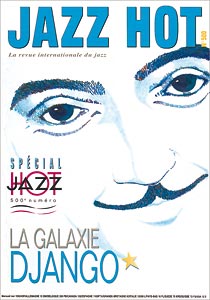
Jazz Hot : Can you detect in yourself some Texan roots? I can hear some of that soulfulness.
(Laughs) Hope so. I don't want to be mis-rooted.
When did you leave Texas?
The first time was when I went to school with Ellis (Marsalis) in New Orleans in 1951. That segued to Denver through '55. I started to jockey for positions, leading me to New York. I was meeting all these people passing through Denver--Charlie Parker, John Coltrane, they were all coming through. I saw some great concerts, by Dizzy, Erroll Garner, Stan Kenton, Eric Dolphy, Johnny Hodges.
Everybody was coming through, and I had this gig that they would all end up at, because it was after-hours. They would sit in. It was at Five Points, which was sort of in the black section. We were at Lil's. In 1955, me and my friend just drove to New York.
Was it inevitable that you would wind up there? Was that always your ambition?
No, I wanted to come out to Los Angeles. I was closer to there. But people were telling me `you better come to New York,' so I switched. I was looking for a place with more jazz. This promised to be one, and there was a lot here. It was a lot more than Texas. Denver had more than Texas. Denver was more on the jazz circuit. Dallas was on the blues circuit, with a few exceptions.
So the original move (to New York City) was in '55. One year later, in '56, I got drafted. That's when they had the mandatory draft, which I had been evading because I was a college student. I let them catch me after I spent a year here. I said `wait a minute, let me go where they have three hot meals a day.' But it was good, because I could see what I needed to work on after being here a year, at the tender of age of 21. I couldn't do that now.
I was lucky to decide to come here, to see things up close and personal. When I was 13, I came here with my mom, in '47. I saw Jackie Robinson and rode on the subway and I said `man, I just love this.' I anonymity part of it appealed to me, because in my hometown, everybody knew me. The teachers would all say `oh, there's that Walton boy,' because my mother was a teacher. I couldn't get away with nothing, man. The history teacher would be sitting on my couch when I came home.
So I though `I want to go somewhere where nobody really knows me.' I didn't want to get away with anything, but just was tired of being so known. And known for the wrong reasons. So I had fun coming here where nobody knows you, or they pretend not to know you, anyway.
From age 13 to 21, I found my way back. At 22, I let Uncle Sam catch me, and at 24, I returned, having worked on those things I needed to, pretty successfully. I worked on my writing. That's all I did in the Army. We had these special services groups not too long after I reached Germany. I met Wayne Shorter before I went to Germany, in New Jersey. I couldn't get in that band because they already had a piano player. It turned out good, because I met Eddie Harris, Don Menza and Don Ellis. It was just a great experience.
By that point, you were already sold on a life in jazz?
No question about it, yeah. While I was in Denver, I played with musicians form there and was just hooked. I met bands that passed through, the likes of John Coltrane, Richie Powell, the brother of Bud, and countless musicians who came to where I was playing, an after-hours joint. That was beneficial to me, but it kind of ruined my college career. I was stupidly scheduling early morning classes. I couldn't make those. When I did, I was half-asleep, so I was naïve in that sense. I probably could have arranged for classes to be later. But I had to stay up in the middle of the night and play this after-hours place.
In one way, it benefited me, because I met some great people, including Charlie Parker. He came through on tour, Charlie and Dizzy and Stan Kenton Errol Garner, and came by later. They were obliged to come to this place we played. This was where the action was. That's where you could get a drink in a coffee cup, made it look like everyone was drinking coffee.
Good musicians were in Denver, as well, including Charles Durell ?, a great African-American bassist who played with the Symphony and also had a great feel for jazz. He's an uncle of Dianne Reeves. That was quite a privilege to play with him. And we had all these people sit in when they came in.
You were one of the pianists who started studying classical piano and then moved over to jazz, right?
Yeah. The point is, when I was of the piano student age, having piano lessons was automatically classical.
There was no such thing as jazz education then?
No, not at that time. So you got the rudiments from Bach, Brahms, Beethoven and the like.
Who were the jazz pianists who intrigued you back then?
Certain ones, not just one. I was just hungry, soaking up everything I could hear. I was fascinated by the likes of Nat Cole and his trio, and literally everybody I could hear. I finally got hold of some Art Tatum and some Bud Powell. I was a slave to these records, being in Dallas, Texas.
In fact, two houses away from me, when these great artists came through Dallas-the strain that included Billy Eckstine and Lena Horne-they would invite them over to have a little soiree. I would wait in the wings. They would say `ok, you can come up now.' I had a great autograph book and got these heavyweight people who weren't quite welcome in the hotels yet. It was a great memory for me. I wish I could find that autograph book. It had everybody-Ellington, everybody.
Everybody came through. Dallas was on the circuit. The artists would very often stay in peoples' homes. My mother was no exception. She would give them a room for the night. I know Willie Smith stayed with us once. My grandmother was impressed with him, because he had a flask. One night, I was in bed, and heard a piano player downstairs. I never found out who it was. But I was thinking `my God, listen to that.' Now, I'm reminded of that when I go to people's houses and I see a piano. Who knows who's asleep in the next room.
So that kind of thing influenced you subconsciously?
Oh yeah. You think `wow.' That lets you know what you can do before you can do it.
Historically, you're often referred to as a hard bop pianist, but I don't know if that quite covers it. What do you think of that description?
I think the first hurdle is just to be 'referred' to," he laughs. "It's not what they call you, but that they call you something. I guess post-bop would be more accurate. I wasn't here in the '40s when bop was developing and was at its apex. I came in '55, when Miles Davis was catching on and MJQ was just forming. It was a transition period. Charlie Parker had just passed away. Coltrane hadn't been hired yet by Miles, but was soon to be. Sonny Rollins was just getting back and I met him here in those early days, when I was 21.
I had a key to a guy named Dave Amram's apartment. He had a piano. I would go there and practice. Sometimes, I would run into Cecil Taylor, who was there before or after me, because he had a key, too. Those kinds of experiences let me know how broad the music was. I didn't know what the hell he was practicing, and might not have known what I was practicing, which was mostly a Bud Powell concept.
But it was hard just to get to a piano in those days, because I was fully housed, let's say.
What did you think of Cecil Taylor at the time?
I remember feeling appreciation for somebody who was consistently going after something. It certainly wasn't' the same thin I was after. But we were all in New York and there was a mutual quest for something, just to be there. It didn't hit me as being anything that unusual. It just seemed like a man possessed with playing the piano, even though it wasn't in the direction I was headed.
As I look back, he's developed quite a following and a reputation in his division of jazz. Jazz has a lot of divisions, you know. I'm just happy to have met him at that stage. There's nothing possible but camaraderie between us because of that. There's no way that anything else could have developed. If I had met him 20 years later, I might have felt different. But us seeing each other back then makes for a bond that is significant. We had that in common when we first started out.
When were you a Messenger?
From '62 to about '64. It was only two strong years. Lots of records made. I left Blakey's band before Wayne did. Miles was trying to get his attention in the last few months before he left. It was known that he was vying for his membership. He was trying to recruit him. He had been with Art for six years. It was time for him to move on, anyway.
Was that Art's idea: to hone musicians and then send them out into the world?
Exactly. A finishing school, if you will. That was a great idea. Art over-dramatized it sometimes, saying `when these ones get too old, I'm going to get me some more young ones.' He would say that to the audience. You could get embarrassed if you were one of the young ones. You would almost rather be one to get jettisoned out.
You had already arrived by then, in a way. You played with Kenny Dorham, Benny Golson...
But to go from that group into Art's was like night and day, because, with all due respect to Benny, it was all his music in that band. I learned a lot trying to play it and getting it right, but I felt a drain on me, because I like to write, too. But there was no room for my stuff, really.
In Art's group, on the contrary, he needed as much as you could give him. As soon as I got in there, they recorded "Mosaic," which we had tried to record with Art Farmer, on Live at the Bird House in Chicago. But somehow it didn't jell right. Not only did it jell with Art, it was the title tune of our first Blue Note album. He didn't write. He liked us for that.
I've talked to subsequent Messengers and they told me Art used to talk about us all the time. We would write intros and interludes, and the younger guys would just write a total tune. He would use us as examples. `Why don't you listen to those guys--Cedar, Wayne. You've never heard of an intro?' He was a great teacher.
The kind of intelligence he had was amazing to me, because prior to meeting him, I sort of equated intelligence with schooling. Through him, I found out that it wasn't necessarily from schooling: it could just be from living, around the world. You could get more knowledge that way than by being a student. Everybody couldn't be Art Blakey, but he certainly did it. He had an amazing intuition about things.
Learning from experience?
Exactly. I would see people like educators and others gathering around him for knowledge. He must have had something going. Doctors, military people, highly educated people, were looking to him for guidance or inspiration.
That period, when you were with Blakey, seems to have set the stage for a lot of what's going on in jazz now. Younger players seem to have a stylistic debt to that period. Have you noticed that?
I guess so. There's a certain similarity or natural sequence from that period to now. That's natural, in a way. There's not much variation or improvement you can do with that format. Miles' band was even more compact than the Messengers. He would use unison all the time, whereas we would go off into harmony. With three horns, you can't get away with that much unison. You gotta' harmonize. The trick is to make it effective.
With Art back there, with all his dynamics, it was easier. He'd come up off his seat with some of those rolls, and make a mediocre tune sound like a great one. His memory was amazing, too. Once he heard a tune, he had it, and he had all the dynamics in it.
One time in Tokyo, Art and I were asked to leave the group for one afternoon and go make a radio taping with some Japanese musicians. That day, Art decided to play like Max Roach. I was shook up. He wasn't Art Blakey that day. He was just playing like Max. I'll never forget that. I guess he just decided to do that that day. He was talented.
When I first got to New York, I used to go visit these events, like a record session I heard about going down with Art Blakey, Philly Joe Jones, Art Taylor, and a rhythm section of Ray Bryant, and Donald Byrd on trumpet. Art was in charge, and it was in this church. So, even before I even got a chance to see Art in action, to see how he was. He knew how to make something work. They didn't have any rehearsal.
Art encouraged me to write. As soon as we got seven or eight tunes, we would go into the studio. It's still paying off for me. To write something and have it record is just a dream come true.
Speaking of that, I was just listening to your 1996 album Composer. It's an all-original song set which shows off your continuing writing skill. Was the idea behind the project?
Yeah. Somebody approached me and said `your composing has gone unnoticed,' which I didn't want to disagree with. He said `let's do all your songs.' I said `ok.' I tried to do all new songs, but each one started to sound like the other. So I got about six in and then the producer said `listen, Cedar's got some old tunes worth exploring again.' So the pressure was lifted off me to come up with an album of completely new ones. We took three or four old ones, but you could say they're in refurbished versions.
It was a great honor to be asked to do that.
It reminded me that you're a strong writer, and that's something you should explore more often.
Thank you. In the sequel to that, Roots, we did all my songs, but not necessarily the new ones. It was on that same label. We had guest artists like Terrence and Josh Redman. We had Ron Carter and Lewis Nash in the rhythm section. We recorded in quartets and quintets, but put the horns on later. Technology being what it is, it really sounded real.
Do you know right away if or not you have chemistry with a musician you're playing with?
It varies with the artist. You might have doubts and then you more or less take strides to eliminate any kind of lack of chemistry, if it's not automatically there. Sometimes, it's automatic, sometimes it's not. I think if it's questionable, you try to adjust it and see what you can do. You don't want to not perform.
If you have a rehearsal, you can work on these things verbally. But if you're in the uncanny position - which is unusual - of having to immediately play in front of people, you really have to make those adjustments quickly. But that case doesn't come up much. You usually have a chance to get acquainted in a non-performance situation and then you can do what you have to do to adjust.
Or grin and bear it, if you have to?
Yeah. At my age, you can adjust. I'm older than most of these people. I just finished working with Moody. He'll be 79 next month, and I'm 70. People like James Carter don't present a problem to me. I'm just older. The longer you play, the easier it gets. Normally, I wouldn't be playing with him. I prefer people who play like Ralph Moore or Cliff Jordan or Bob Berg or Vincent Herring, more traditional players, I guess you could say.
Carter plays in the style of Coleman Hawking, Lester Young and that tradition, but he has a lot of gimmicks he uses. We had a lot of fun, though. We were playing some of my songs and he was featured where he could do his things. It was really mellow the way it worked out in the last six weeks.
Do you have any reflections on the passing of Billy Higgins? He played with you for many years.
Yeah, a lot of years. 20 or more. We really had a good relationship. We were both young in New York, and we both got called often, mutually, by bandleaders like Lee Morgan, Donald Byrd, Hank Mobley. We found ourselves on these gigs together on several occasions. That's how we met. I met a lot of folks like that. Our union just lasted.
One thing about him that impressed me the most was that he was instant (with his responses). As soon as the song started, we were in the middle of the song. There was no development. He played according to what was being played. He could miraculously anticipate what I would do, especially after playing together for awhile. It was so much fun, communicating with him. He was the ideal drummer for a pianist. So it worked out good.
And, you know, he came to town with Ornette Coleman, so it wasn't that obvious that he was familiar with these other more traditional styles. But he was. He grew up listening to that music. We had a lot in common in terms of how we grew up listening.
I would say that you're both subtle players...
We're not show-offs, you mean?
That's it. You're just playing the music.
That's the goal.