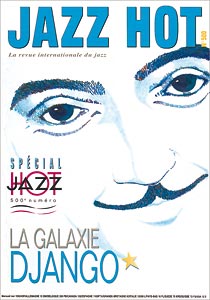
Byard LANCASTER (Jazz Hot 605)

by Jérôme Partage


Jazz Hot: You were born in Philadelphia…
August 6th 1942. In a very little part of town called Chestnut Hill.

Can you talk about your family? Are there any musicians in your family?
The family was in the American tradition of people being aware of music and singing in the church. And everyone in my family was offered opportunities to study music. I have two brothers; one is a politician and a businessman, the other is a retired educator and I have a sister who has a degree in ethnomusicology. She studied with Doctor Nathan Davis in the University, who is famous here in Paris and Belgium. He is a saxophone player but he is an educator. And I began playing and saying that I would play all my life. I had lessons and I was the first African-American from Philadelphia to go to the Berklee College of Music.

How was the Philadelphia of your childhood? How was the situation of the black community, of jazz music?
All the black people of my street were in night clubs, in 1944. And all this clubs are still there and we still play there. They always have jazz in their jukebox and they always have jazz every month for the last fifty years. All theses places were from two blocks of my home and school. We had everything that we needed right on our street. There was a movie on my street also.

How did you study music?
I started on the piano very young, for six to eight months and then I switched to the saxophone. I had a saxophone teacher from 5 to 15. I joined the elementary school’s orchestra for three years. Then I went to another school and I played in an orchestra and a jazz band with one of my mates: Kenny Barron. When I was at high school, I played in a marching band, an orchestra, a jazz band and combos. At first I played the alto saxophone, in middle school I played the alto saxophone and the tenor saxophone, and then I played the alto saxophone and the baritone saxophone and clarinet. Then later on in my first year at Berklee College, I began to play the flute. Then Eric Dolphy got me my bass clarinet, so I played the bass clarinet, later on I started the trumpet. At 14 I began to go the night clubs. I could stay out late because at that time there was no crime. So I could hear great players like Wild Bill Davis. And at 16 or 17, I heard John Coltrane with Miles. Then I got a chance to talk to Coltrane every night for two weeks. He went away and he came back again. Philadelphia has always been a jazz town, so jazz was everywhere, my brother had jazz records and some of my school mates had some records of Art Blakey and Monk, so we have always been exposed to the best. In my city Nina Simone performed every night and I could go and listen to her from outside of the club. There were always some concerts of Lee Morgan, Art Blakey and the Jazz Messengers downtown. Right now my main concentration is singing and piano and orchestration. So I carry a variety of flutes with me, African flute, Jamaican flute. I have just got a flute made in the city of Nîmes. I always try to collect flutes.

Why did you choose to play the saxophone?
Because there was a man who lived across the street from me, who played the saxophone on his porch. I saw him everyday playing on the porch, and I said to myself that was what I wanted to do, I was four and half.

Which saxophone players influenced you?
Sonny Stitt, Jackie McLean, Sonny Rollins and Paul Desmond and then John Coltrane and that was it.

You played with Sun Ra in the 60’. What did this experience bring to you?
I play all the time because Sun Ra told us that “if you feed your body everyday you must feed your spirit everyday by playing your music”. When I worked with Sun Ra’s Arkestra in Philadelphia, my band joined his band and he insisted we played six to eight hours everyday. Nothing else was important. You come here for rehearsal at ten o’clock in the morning by time you get out it is six o’clock. He wanted the whole band to live in the same house and they had to rehearse everyday or move out of the house. In New York, I lived across the street from Sun Ra in 1962 and 1963. He moved to Philadelphia in 1966-67 and I played with him for the first two years in Philadelphia. Living with Sun Ra was living with someone who is completely dedicated, who has no idea, no desire to do anything else except doing his music. No matter what type of politics or money or social situation, you work for your music first.
You get up and you practice and you work and then you go to sleep, anything else. So if the electricity has been cut off or you do not have clothes, you do not have food, it does not matter, you play the music for us and God will provide. So that’s what we learnt and he insisted on that. That’s what I got from Sun Ra.

When did you come for the first time in Paris?
I first came to France in 1969 under the leadership of the father or even god of drumming: Mr. Sunny Murray. And we came to play a festival in Paris and we were required to remain in Paris thirty days while they rescheduled the festival out of the city. Sometimes after, I came back for six months. That is when my freedom of expression started to expand because I had hours and hours to concentrate, no family in other words. The family was the band. We found in France an artistic freedom that you cannot find now. I spent 1973 and 1974 here. I was working for Ronald Shannon Jackson’s records. In 1974, Jeff Johnson called me and asked me to record some albums with him. So, I moved to his apartment and we recorded whatever we wanted to record for one year. I know we did more but at least we released nine of our discs. After so many albums, he was upset that I was homesick and that I wanted to go back to Philadelphia, but he wanted to recorded one more CD and with Eddy Louiss. In coming to Paris, my eyes were open to another culture. It was the first time I left the United States and then I learnt that there is more than one way to do things. Many people said to me that a lot of people in France loved jazz more than people in America. And I always said to them: “No, they don’t, they are just more organized and they recognize the value of our music. American people don’t need jazz as much because they have men who produce it whereas French people don’t have African-Americans.” There were forty jazz musicians possibly living in Paris at that time. But the climate begun to change; jazz avant-garde musicians were directly attacked and most of them had to return home.

And what do you think of the situation of jazz music in France today?
In February 2000, I produced one of the top French bands in Philadelphia: Moutin Reunion. I was contacted by their manager, then introduced to the French Consulate in Philadelphia and then invited to the French Embassy to a particular celebration of their wonderful tour. It was fancied by French Government. And the French Government took them to Pittsburgh for their first concert, then Washington D.C., Baltimore, Boston, Massachusetts and New York. But during my conversations with the consulate and Embassy, I was told, at that time, that the mayor of Paris did not want to invite black jazz to Paris, but they would give me all the addresses of the Provinces. They were more interested in having French musicians coming to the United States than jazz musicians to visit Paris, because they would be coming for hundred years. Here, in France, the McDonald’s culture has lead to imitations of jazz, imitations of John Coltrane, etc. And universities or schools that are teaching jazz are not teaching soul jazz, they are teaching academic jazz. Therefore, we understand and we respect the idea that French society has developed its own jazz. I came here and in other cities like Lyon to teach a workshop twelve years ago. So now the former students are the teachers and they have instituted their own music. I enjoy coming in Paris because I have been here to learn so many things but it is not a priority anymore.

You are the promoter of Philadelphia’s jazz: “Philly Jazz”…
Philly Jazz means that we are not interested in what happen in California, Chicago, Paris or New York but we are responsible to feed our community and our city. Because our jazz is the best document of history for black people in the world, because the books that they would give you in a school were rearranged, many of the proper details were left out and many of the outstanding African personalities were forgotten. Many books on music never said a word about African music.
Philadelphia is the first capital of the United States and it is the root of American culture. Chicago is a blues town, Los Angeles is a movie town, and Boston is an educational town, so Philadelphia has to become the strongest jazz city.

You have your own label of Philly Jazz: Byard Lancaster Recordings…
I try to perform for a minimum of people each year. And if I can sell 1,000 CDs, I am happy. As I am producing them I get 10 dollars per CD, there is no royalties to pay to SACEM or BMR because many percent of the music is my music or the music of my comrades. I record about 20 CDs a year, but it is all different types of music and we have limited distribution but some of our labels are reached in France. I have spoken to Paris Jazz Corner about reissuing the material I did in the 70s. I am planning to release a catalogue of my music on the Lancaster label and distribute them to France and ask Paris Jazz Corner to distribute them to the rest of Europe.

How do you organize your life?
In Philadelphia I work in average three times a day. I play my music in the schools at 8 o’clock in the morning, I play in the street at 3 in the afternoon and then I go to the studio or a club or a concert centre in the afternoon or early evening. When I play on a street, I play for 10,000 people, just for a few hours, and I can distribute flyers, advertisement, and I can sell many CDs and make lots of contacts for future work.
Moreover in many of the clubs of Philadelphia, we begin the show at 5 in the afternoon and we finish it at 9 or 9.30, so we are not out till 1 or 2 o’clock in the morning. When I first began to play I picked up the saxophone, just to try to make some sounds and then, as I learnt in school, it took me half an hour to warm up. Because like if you play sports, you have to warm up before you perform. I am 60 years old now. And now it takes me three hours to warm up because I have some much to put in my instrument. Moreover, I am carrying ten instruments, so it takes me at least two or three hours to warm up, just to go around and play them all and get the stage.

Can you give your own definition of jazz music?
Oh yes, I do. Jazz as we have seen it, for the last hundred years, has been a face of African rhythm, European theory, technique and instrumentation, Asian aesthetics, African-American imagination and American business. Moreover Coltrane changed everything in jazz music. In the prime of his days, he was playing twelve to fourteen hours a day. The great players like Freddie Hubbard, Lee Morgan played eight or fourteen hours in the first part of their lives. But after they’d made a certain economic level, they have chosen to just create the same music over and over again and to live in society. Whereas Coltrane was saying that it was an urgency to step out of the society. Because, for him it was not about playing our music for entertainment, it was survival information that he was beaming from God. And he had to pass the arm to us. He knew that he had to do it till the end. Technically it is a war, a war to survive. In fact, the African-American community is represented by the jazz but jazz is always inviting any race to perform. You could be Black, or you could be African, you could be Jamaican or whatever, you can play if you have the desire to learn. In Philadelphia, we have invited the French, the German, and the Japanese, whatever. And this is the message that Louis Armstrong began with and this is also the message that John Coltrane established with his Love Supreme.

How do you see the future of jazz music?
The most important thing I want to say to answer your question is that we have decided to return our music to Africa because that is where we came from. We came from darkness and we must go back to darkness. That’s why I turned my music and stopped performing in France, stopped recording in New York. I went to the African societies and started cooperating to African techniques rather than to bebop techniques. John Coltrane in his last years insisted on having two or three or four or five percussionists, two drummers. So now we are organizing to incorporate larger ensembles, we have multi-rhythms going on, two bass players. But the city of Paris is not interested in inviting us.

What are your other projects?
In Paris I can speak to many African communities whereas if I go to Africa I could only talk to one country at the time. So we have decided to put our ideas together and to solicit support from French government and every other government which is interested in jazz to help us to produce a concert in Timbuktu. We make Philly Jazz but we invite musicians from Jamaica, from Canada, from California, from Paris, and from Germany, and from South America and other African countries to this festival.

Traduction Carole Couque


Ray BLUE

Tenor and soprano saxist Ray Blue has had a varied career - what with Sun Ra, Ornette Coleman and the Spirit of Life Ensemble, he has developed a musical vision of his own, drawing on the blues for strength and depth of expression. A lyrical performer, he makes the most of his technical ease, circular breathing and a thick sound that stays in your mind long after the final note. He has recently recorded live at the Franc Pinot, in Paris and shares his time between Berlin and New York.


Jazz Hot : Where do you come from ?
Ray Blue :
I was born in Portsmouth, Virginia on August 17, 1950 and raised in Peekskill, New York. I grew up listening to my parents big band recordings of Duke Ellington, Count Basie and Billy Eckstine, to name a few, and already at a young age was inspired by saxophonists Ben Webster, Coleman Hawkins, John Coltrane, Sonny Rollins, Sonny Stitt and a host of others. As a youth, I spent time listening to local bands rehearse at the clubs and talking with the musicians. I did not realize that at the time but there were many good local musicians and I heard a lot of great music. Art Davis settled there and I played with him once. He even played one of my tunes, “Two Kings”.

Did you get a church education ?
I went to an Episcopal church and sang in the choir. We did not sing gospel but my parents took us to listen to spirituals in black churches. Church has been part of my childhood. Spirituals acts are more important than the different religions themselves. I like playing in churches, you’re in synch with the people. My father was a hairdresser and my mother the high school secretary. They taught what working hard was and supported me in my choice of doing music. There was jazz at home but I also was a big fan of Junior Walker or King Curtis. I played soul, funk and I keep something of that period. Older musicians kept asking my parents the permission for me to play but I was too young and they would say no. I was always trying to sneak in the jazz clubs and listen to jazz in spite of my age.

How did you start music ?
There was a good school program ; at age 8 I began studying clarinet and at age 14 included the tenor saxophone and bass clarinet, playing in school orchestras, concert and big bands as well as r&b bands. My first gigs, at age 15, were local clubs, dances and parties, playing a mixture of r&b and jazz. After earning a Masters Degree in Clinical Social Work from the University of Iowa, I went on to study music privately with Paul Jeffreys, who had been recommanded to me by Courtney Winter (s). He taught me more than technique - discipline, hardwork, sharing… You have to share the musical knowledge that was passed on to you and help other musicians discovert their own personality.
I met Charles Davis (ss, ts, bs) through the Jazzmobile in New York and he showed me how to have confidence and at the same time be critical of my own playing, how to analyze what you hear. He told me about workmanship, about the business, about being ready to take chances at any moment.
Sonny Sharrock (g) was a sax player at first and he made me go deeper into harmony and not being afraid of one’s own self.
I was mentored by Ornette Coleman too. I met him through a cousin of mine who designed his clothes. He came to listen to me, analyzed the harmony of some of my tunes and told me about harmolody. He helped me build my own musical personality - you need that confidence if you want to accomplish something. With regard to the teaching method, I experienced several, being introduced to the George Russell method as well as to the approaches of Coltrane (chordal and scale studies and harmonies), Parker (harmonics and bebop), Monk (dissonance), Miles (modal) and Ornette (chordal analysis). During this time of intensive study I worked in different jazz and r&b bands in New York City and the Metropolitan area.

And who were your first important gigs?
I have worked with the Sun Ra Arkestra, Cotton Club and Spirit of Life Ensemble big bands, and have performed with artists such as John Patton, Larry Willis, Ted Curson, Eddie Henderson, Joe Lee Wilson, Noel Pointer and John Gilmore. My festival performances include: The Macao Jazz Festival, Macao, China; The Newport in New York Festival, New York City; The New York State Black Arts Festival, Albany, and recently The Berlin Fringe Jazz Festival, Berlin as well as The Avo Blues Festival, Zurich. Since late 1999, I have been touring in Western Europe; Germany, Switzerland and France, performing in cities such as Berlin, Frankfurt, Heidelberg, Stuttgart, Bern, Geneva, Zurich, Luzern, Arbon, Annecy and Paris.
I have recorded with bands for RCA and Columbia record companies and other private labels. And I have a record out, Always With A Purpose which was released a couple of years ago.
In addition I consult in various educational settings as lecturer, workshop facilitator, clinician and provide master saxophone classes.

You have played in a great variety of contexts…
John Patton played in one of my trios with Bobby Battle (dm). I played some funk jazz with Larry Willis. Playing with the Spirit of Life Ensemble has got me in touch with very different musicians, some of them real legends like Ted Curson, Eddie Henderson or Joe Lee Wilson. I also played with Noël Pointer who was a great historian and teacher concerning the African-American part of the music. The elders have taken me under their wings too like John Gilmore (ts) when I was with the Sun Ra Arkestra. I really admired John - I was so impressed being the youngest of the band! He explained a lot to me, he was a very quiet person. One night he played a solo without even moving his finger- harmonics only ! We had to talk about dealing with a mouthpiece after that because I couldn’t believe it!

Do you feel you are a new-yorker ?
I am from New York it is one of the Jazz capitals of the world. Many, many musicians migrate there to study, learn and play. What else could be said about it? However, in my European travels I found a lot of enthusiasm about the art form and have met and performed with great musicians, making wonderful music. I live both in New York and Berlin now. I thought rather than wait to be invited to play in Europe I might as well make the trip. Iplay with talented people, I hve an audience. I don’t know what Euro-jazz is - the roots of this music are nor European so jazz can’t be a European thing. People in Europe can play, just as they can in Japan and anywhre else, because jazz is a music that you share, but that’s not where its roots are.

How would you describe your music ?
Its a warm, smooth, vibrant, sensitive music, it talks about life experiences that are familiar to most. For example when you hear the songs of my CD "Always With A Purpose", there are a blend of emotions: a feeling of sadness in "Two Kings", warmth and passion in the love song "Desirée", something wild about the unpredictable, sporadic part of human nature in "Stuffn Such", and there is relief and confidence after a long struggle things work out, you get through times, that’s the message of "Okay Now". There is a statement in every piece, however, each time you hear it, it has a slightly different meaning. Music is a healing element whether you play it, compose it or just listen to it.

What is your conception of jazz?
Jazz is a spiritual music that is unique within itself. It is created for all people. It is sophisticated, complex and basic all in one. It’s a unique collaboration of time, rhythms, harmonies and melodies that deliver a human message. The message is music.

How do you view the scene today?
The scene is very competitive, there are more musicians studying and performing than ever before. The competition enhances the level of the music which is played. That’s good. However, there need to be more venues for the music.

Do you think the current media/business environment is favourable for jazz?
Not favorable enough. More exposure is needed and it should be presented within the education system at the primary school level in all schools everywhere. Jazz music is an education for the heart and for the mind and should be experienced at the earliest age possible.


Contact: rayblueisax@yahoo.com